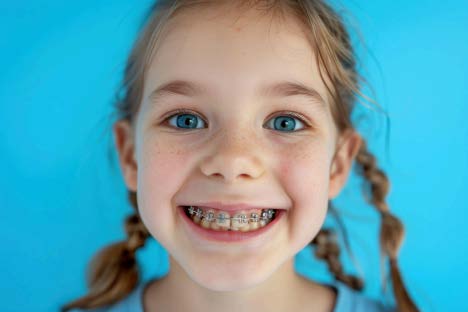
When someone hears “going to the orthodontist,” the first thing most people think about is getting braces, although orthodontic treatments may include much more than just braces. Many middle and high school students are fitted with traditional brackets and wires to correct and guide the adjustment of their teeth, while others opt for clear aligners to do the same job. We also see many adults wearing braces or invisible aligners to help straighten their otherwise healthy teeth. Sometimes though, you will see a child who is 7, 8, or 9 years old wearing braces. We’ll talk about why someone would benefit from orthodontic treatment at various ages and how we can use early intervention to help minimize or even eliminate the need for future treatments.
Early Orthodontic Start Times
An initial orthodontic evaluation should happen when your child is six or seven. Why is this age so significant?
Usually, by age seven, a child has started losing baby teeth, and some adult teeth and the first set of molars have started growing in. An orthodontic visit at this time helps ensure that your child’s smile is forming as healthily as possible.
Some kiddos may not need orthodontic treatment, some may need to be evaluated again at a later date, while others may need early orthodontic treatment. Why would they benefit from this?
Early treatment can prevent or minimize the need for other orthodontic procedures in the future. Some issues can be corrected most easily at this age, while the jaw and facial bones are still growing and malleable and the teeth are still erupting, so the bones can be ideally shaped and front teeth can be repositioned if not in alignment.
This time is perfect for an orthodontic evaluation of your child, so we can identify potential issues with your child’s teeth and bite. We devise a plan of action if we feel they may need treatment. Here are some of the potential issues we look for:
Malocclusions, or “bad bites,” such as:
- Not enough room for teeth to grow, also called crowded teeth
- Excessive space between teeth
- Congenitally missing teeth
- Extra teeth
- Overbites
- Underbites
- Crossbites
- Buck teeth, where the front top teeth protrude out
There are other reasons early intervention is beneficial, and they can include:
- Early loss of baby teeth
- Baby teeth haven’t fallen out because there are no adult teeth underneath
- Mouth breathing
- Speech difficulty
- Problems chewing, biting, and swallowing
- Facial features are imbalanced
Some Potential Treatments
Early orthodontic treatment usually occurs sometime between 7 and 10 years of age and may include braces on the front teeth. The orthodontist may prescribe braces and fixed or removable appliances to gently reposition the teeth and encourage the correct development of the muscles and jawbone, palate, and teeth if necessary.
Our team can determine if your child’s teeth have room to grow in the available space. Space maintainers and palatal expanders can help hold space or create new space. For example, the orthodontist may need to add a space retainer if a tooth falls out too early and the adult tooth is not yet there to take its place. This apparatus can be fixed or removable and helps the teeth on each side of the space stay in place until the new tooth erupts.
Palate expanders help widen the roof of a child’s mouth. They provide more room for the teeth to erupt, help form the structure of the face, and assist with the correct development of the nasal airways.
In the case of overcrowding, extractions may be necessary if the primary teeth have not fallen out.
After treatment, our doctor may prescribe a retainer to be worn only at night. It ensures the appliance is kept in place when the child is less active. Sometimes, children who receive early intervention will not need any further treatment. Often though, early treatment is the first of two phases of treatment, and they will receive a second phase to correct bite and alignment issues once the remaining permanent teeth have erupted.
Conventional Orthodontic Start Times

If your child did not need early treatment, or is receiving two phases of treatment, conventional treatment to address crooked teeth or a misaligned bite is usually done between the ages of 11 and 14. This is a great time for treatment because all of the adult teeth have usually grown in, but the teeth and jaw bones can be aligned and corrected more easily while the child grows into adolescence.
It’s Never Too Late!
Dr. Gregory Olsen sees both pediatric patients and adults. Older teens and adults who were not introduced to orthodontia early are not too old to benefit from treatment. Braces and other intervention techniques for aligning teeth are great for any age! They can improve oral health because, over time, crowded teeth can lead to more serious dental issues like tooth decay and gum disease, while poor alignment can impact speech and chewing and even contribute to headaches.
While you can start orthodontic treatments at any time, sometimes older teens and adults may find that the process takes longer for them to see results. The teeth do not move as quickly as before puberty, as the bones are less malleable. Braces and clear aligners may take a bit longer to provide results, but it’s never too late to get straight teeth and correct imperfections in your smile to improve your overall oral health.
Comprehensive Pediatric Dental & Orthodontic Services
We offer comprehensive orthodontic evaluations. Some children do not need braces or orthodontic treatment! For others, our team may decide only to monitor your child’s teeth and jaw structures, or we may recommend treatment for any issues.
If your child needs early treatment, around seven years old, it usually takes a shorter time to correct. This is because we create a custom treatment plan to help mold the mouth of someone actively growing and to prevent an issue from becoming worse, rather than waiting to treat an older teen or adult whose bones are less malleable.
For any patient, no matter what age they begin treatment, our providers can help you and will craft a treatment plan customized to what your child actually needs.
Takeaways
Our goal at Jungle Roots Dentistry and Orthodontics is to help your child enjoy optimal oral health. This may include a recommendation to straighten your child’s teeth in order to prevent poor oral health or more involved procedures in the future. Aligning teeth and guiding the formation of the jawbone while it is malleable aids the natural, optimal development. We can help prevent tight spaces that encourage food particles to be trapped, provide appliances to maintain the correct formation of the bite, and expand the palate to deter medical issues. Our orthodontic team is privileged to see patients of any age and help care for the framework and oral health behind those beautiful smiles!