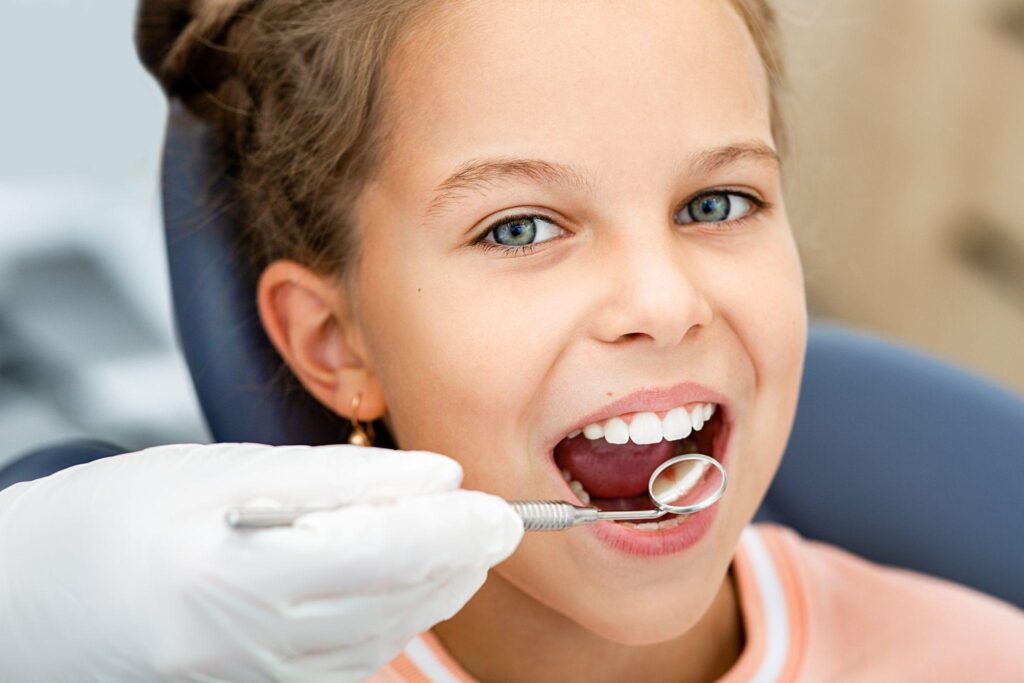
If your child’s orthodontic evaluation ended with the words “palatal expander,” you probably left with more questions than answers. What is it? Will it bother your child? Why now? Here’s what parents should know about how expanders work, who they help and what to expect from start to finish.
What Is a Palatal Expander?
A palatal expander is a small, custom-made appliance that gently widens a child’s upper jaw. It sits against the roof of the mouth and attaches to the upper back teeth, using light, steady pressure to make more room as your child grows. It’s one of the most common tools in early orthodontic treatment for kids.
Here’s why it works so well in children. The upper jaw is made of two halves joined by a growth seam down the middle of the palate. In growing kids that seam hasn’t fused yet, so an expander can guide the two halves apart gradually and safely.
A few quick points worth knowing:
- It’s different from braces. Braces move teeth, while an expander widens the jaw itself.
- It’s made to fit your child’s mouth.
- It’s often used before braces to create space and correct bite problems early.

Who Needs a Palatal Expander?
Expanders are usually recommended when the upper jaw is too narrow for the teeth or for the lower jaw. The American Association of Orthodontists recommends a first orthodontic evaluation by age 7, partly so problems like these can be caught while a child is still growing.
Common reasons Dr. Olsen recommends an expander include:
- Crossbite. The upper back teeth sit inside the lower teeth when your child bites down, which can cause the jaw to shift to one side.
- Crowding. There isn’t enough room for permanent teeth to come in straight. Our page on crowded teeth explains why it happens.
- A narrow palate. A high, narrow upper arch can limit space for teeth and make the bite harder to correct later.
Other signs worth mentioning at your child’s visit include mouth breathing or snoring, a long history of thumb sucking and baby teeth lost very early. Widening a narrow upper jaw may also make breathing through the nose easier for some kids, though that depends on the child.
Not every case of crowding needs an expander. Dr. Gregory Olsen looks at your child’s growth, bite and teeth before recommending one, and sometimes the right call is to wait.
Turning, Wear Time and Discomfort
Most expanders have a small screw in the center that’s turned with a special key. Each turn widens the appliance a tiny amount, and Dr. Olsen gives every family a turning schedule that fits their child’s case. Parents usually handle the turns at home, and it only takes a moment.
Treatment happens in two stages:
- Active expansion. This is the turning stage. It continues until the upper jaw reaches the width Dr. Olsen is aiming for.
- Holding. Once the turning stops, the expander stays in place while new bone fills in along the seam. This keeps the new width stable.
Don’t be surprised if a small gap opens between your child’s two front teeth during expansion. It’s a normal sign that the expander is working, and the gap usually closes on its own as the teeth settle.
Most kids describe the feeling after a turn as pressure or tightness rather than pain, and it fades quickly. Speech and swallowing can feel a little different at first, but kids tend to adjust quickly. Your child will have follow-up visits so Dr. Olsen can check progress, make sure the appliance fits well and answer any questions.
Eating and Cleaning With an Expander
Soft foods are easiest in the first few days. Think yogurt, pasta, scrambled eggs, soup and smoothies. After that most kids go back to a fairly normal diet with a few exceptions.
Foods to avoid while wearing an expander:
- Sticky foods like caramel, taffy and gum
- Hard foods like ice, hard candy and nuts
- Crunchy snacks like popcorn and hard chips
- Anything your child might chew on, like pencils or fingernails
Food can get trapped around the appliance, so cleaning matters. Have your child brush after meals, rinse with water and use a water flosser or small brush to clear food from under the expander. A quick check in the mirror after eating goes a long way.
What Happens Next
Once the holding stage is done, Dr. Olsen removes the expander. Some kids need nothing more for a while, and Dr. Olsen simply monitors their growth as the rest of their permanent teeth come in. Others move on to braces later to straighten the teeth and fine-tune the bite.
Either way, expanding early usually means later treatment has more room to work with, which can make it simpler.
Insurance and Payment
An expander is often part of a larger early treatment plan rather than a separate item. Many dental plans include orthodontic benefits for kids, and families can also use HSA or FSA funds, CareCredit or monthly payment plans. Our team will check your coverage and explain how it applies before treatment begins.
Frequently Asked Questions About Palatal Expanders
At what age should kids get a palatal expander?
Expanders work best while the upper jaw is still growing, which is why they’re usually used in younger kids. Every child develops differently, so the AAO recommends a first orthodontic evaluation by age 7. Dr. Olsen will tell you whether the timing is right for your child.
Is 9 too late for a palatal expander?
Usually not. Many 9-year-olds are still growing and are good candidates. An evaluation will confirm whether your child is.
What should kids avoid with a palatal expander?
Sticky, hard and crunchy foods like caramel, gum, ice, hard candy and popcorn. These can damage the appliance or get stuck in it. Soft foods are the safest bet, especially in the first few days.
Does a palatal expander hurt?
Most kids feel pressure or tightness after a turn rather than pain, and it fades quickly. If anything feels off, call our office and we’ll take a look.
How long does my child wear the expander?
It depends on how much widening your child needs. The expander stays in through the turning stage and the holding stage that follows, and Dr. Olsen will give you a timeline at the start of treatment.
What are the downsides of a palatal expander?
There’s a short adjustment period where speaking and eating feel a little different, and cleaning takes extra attention. Most kids adapt quickly, and the long-term benefits usually outweigh the temporary hassle.
Wondering if your child might need an expander? Request an appointment or call (480) 759-1119 to schedule a complimentary orthodontic evaluation with Dr. Olsen at our Ahwatukee office.