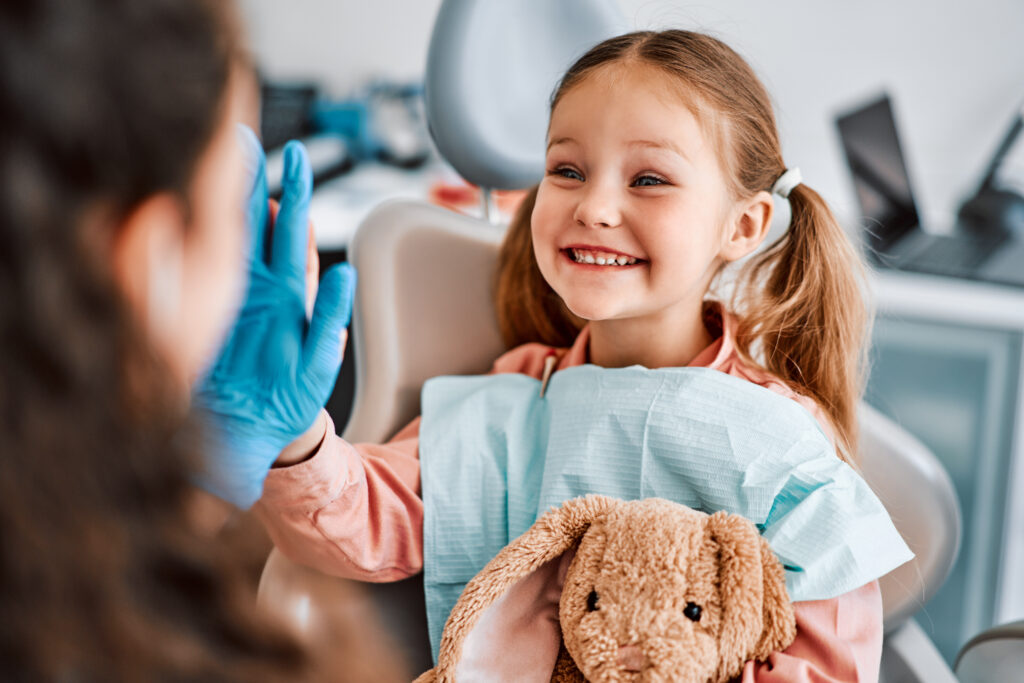
Wondering when to book your child’s first orthodontic visit? Most parents assume orthodontics starts in the teen years, but the recommended timing is much earlier. Here’s what families in Ahwatukee and across Phoenix should know about early evaluations, what happens at one and why they matter.
What Is the Recommended Age for a Child’s First Orthodontist Visit?
The American Association of Orthodontists (AAO) recommends that every child have a first orthodontic evaluation by age 7. By then most kids have their first permanent molars and a mix of baby and adult teeth, which dentists call mixed dentition. That mix gives an orthodontist a clear look at how the bite, the jaws and the incoming teeth are developing.
Here’s the reassuring part. This first visit is a checkup, not a commitment to braces. Many parents worry that an early evaluation automatically means treatment. It doesn’t. Most kids are simply monitored while they grow, and the orthodontist steps in only when there’s a clear reason to.
For kids who don’t need anything yet, the visit offers peace of mind and a baseline for future decisions. Think of it as a growth check for your child’s smile.

What Happens at Your Child’s First Orthodontic Evaluation
A first evaluation is relaxed and designed with kids in mind. At Jungle Roots Children’s Dentistry & Orthodontics, pediatric dentistry and orthodontics are under one roof, so your child sees familiar faces in a place they already know. Here’s what to expect.
- Health history review. We’ll talk about your child’s dental history and habits like thumb sucking, and pull up their records so Dr. Olsen has the full picture.
- Exam of the teeth, jaws and bite. Dr. Gregory Olsen checks tooth alignment, how the upper and lower jaws meet and whether permanent teeth are coming in on schedule.
- A closer look if needed. If Dr. Olsen wants to see what’s happening beneath the gums, images help show tooth position and any teeth that haven’t come in yet.
- Findings in plain language. Dr. Olsen walks you through what he sees without the jargon, so you understand exactly what’s going on.
- A clear recommendation. You’ll leave knowing whether your child needs nothing right now, continued monitoring or an early treatment plan.
The evaluation is complimentary, and there’s no pressure to decide anything on the spot. You can read more about what’s included in a complimentary orthodontic exam.
Benefits of an Early Orthodontic Evaluation
Early evaluations aren’t about rushing into treatment. They’re about catching problems while a child is still growing, when some options are easier than they’ll be later.
- Catches crowding, crossbites and jaw issues early. Spotting them while the jaws are still growing often means simpler solutions.
- Guides jaw growth when the timing is right. A palatal expander works with the upper jaw while it’s still developing.
- May make later treatment simpler. Creating room early can sometimes reduce the need to remove permanent teeth down the road.
- Addresses habits before they shape the bite. Long-term thumb sucking and mouth breathing can affect how teeth come in and how the jaw develops.
- Sets a baseline. Even if nothing happens now, Dr. Olsen has a reference point for tracking changes as your child grows.
- Gives parents peace of mind. You walk away informed, with no obligation to start treatment.
This kind of early care is sometimes called interceptive orthodontics. The idea is to use your child’s natural growth to guide development rather than correct problems later. Our page on early orthodontic treatment explains the options in more detail.
Phase 1 vs. Phase 2 Orthodontic Treatment
Phase 1 treatment happens while a child still has a mix of baby and adult teeth and focuses on guiding jaw growth and making room. Phase 2 begins once most permanent teeth are in and focuses on aligning the full set of adult teeth. Not every child needs Phase 1, but when they do, it can set the stage for a smoother Phase 2.
| Feature | Phase 1 (Interceptive) | Phase 2 (Comprehensive) |
|---|---|---|
| Timing | Mix of baby and adult teeth | Most permanent teeth in |
| Goal | Guide jaw growth, create space and correct bite issues | Align permanent teeth and finish the bite |
| Common appliances | Palatal expanders, space maintainers and partial braces | Metal braces, clear braces and clear aligners |
| Who needs it | A smaller group of kids with specific problems | Most kids and teens who need orthodontic treatment |
Think of Phase 1 as groundwork and Phase 2 as finishing work. Many children skip Phase 1 entirely and start braces or clear aligners as teens. For kids who need both, there’s often a resting period in between while Dr. Olsen monitors growth and lets the permanent teeth come in.
Insurance and Payment for Early Orthodontic Care
The first evaluation at Jungle Roots is complimentary, so you can get expert guidance before making any decisions. If treatment is recommended, these can help.
- Insurance. Many dental plans include orthodontic benefits for kids. Check your plan for a lifetime orthodontic maximum and any age limits.
- HSA and FSA funds. These can generally be used toward orthodontic treatment.
- CareCredit and monthly payment plans. Both let families spread treatment out over time.
Our team will check your benefits and explain how they apply before any treatment begins.
Signs Your Child Should See an Orthodontist Before Age 7
Age 7 is the standard recommendation, but some signs are worth an earlier look. If you notice any of these, give us a call and we’ll help you decide whether to come in sooner.
- Difficulty biting or chewing, or avoiding certain foods because eating feels awkward
- Baby teeth lost very early or very late
- Persistent mouth breathing during the day or at night, especially with snoring
- Thumb or finger sucking past age 4
- A crossbite or a jaw that shifts when your child bites down
- Severely crowded, blocked or protruding teeth
Habits are worth watching closely. Our post on thumb sucking and pacifier use covers when they start to affect the teeth.
Same Office as Your Child’s Dentist
At Jungle Roots, Dr. Olsen works in the same office as our pediatric dentist, Dr. John Culp, and the two share records. Dr. Culp watches how the teeth and jaws develop at every checkup, and when it’s time for an orthodontic look, your child sees Dr. Olsen in the same building. It’s one reason families choose us for orthodontics in Ahwatukee for kids, teens and adults.
Frequently Asked Questions About Your Child’s First Orthodontist Visit
Is 7 years old too early for braces?
Age 7 isn’t too early for an evaluation, but it’s usually too early for braces. The first visit is a checkup where the orthodontist looks at how your child’s teeth and jaws are developing. Most 7-year-olds don’t need treatment yet and simply leave with a monitoring plan.
Will the orthodontist put braces on at the first appointment?
No. The first visit is for examination and discussion. If treatment is recommended, you’ll have time to review the plan, ask questions and schedule a separate appointment to begin. There’s no pressure to decide the same day.
Does insurance cover orthodontic care for kids?
Many dental insurance plans include orthodontic benefits for children, though coverage varies by plan. Some cover part of treatment up to a lifetime maximum. The first evaluation at Jungle Roots is complimentary, and our team can help you understand your coverage before any treatment begins.
Should we wait until all the baby teeth fall out?
Waiting until all the baby teeth are gone can mean missing the best window for some treatments. The mixed teeth stage around age 7 is ideal for spotting bite and growth issues because the orthodontist can guide development while the jaws are still growing.
What should we bring to the appointment?
Bring your child’s dental insurance card, a list of any medications and any previous dental records or X-rays you have. If your child has worries, jot them down ahead of time so nothing gets forgotten. A familiar comfort item can help younger kids feel relaxed.
Ready to find out where your child’s smile stands? Request an appointment or call (480) 759-1119 to schedule a complimentary orthodontic evaluation with Dr. Olsen at our Ahwatukee office.