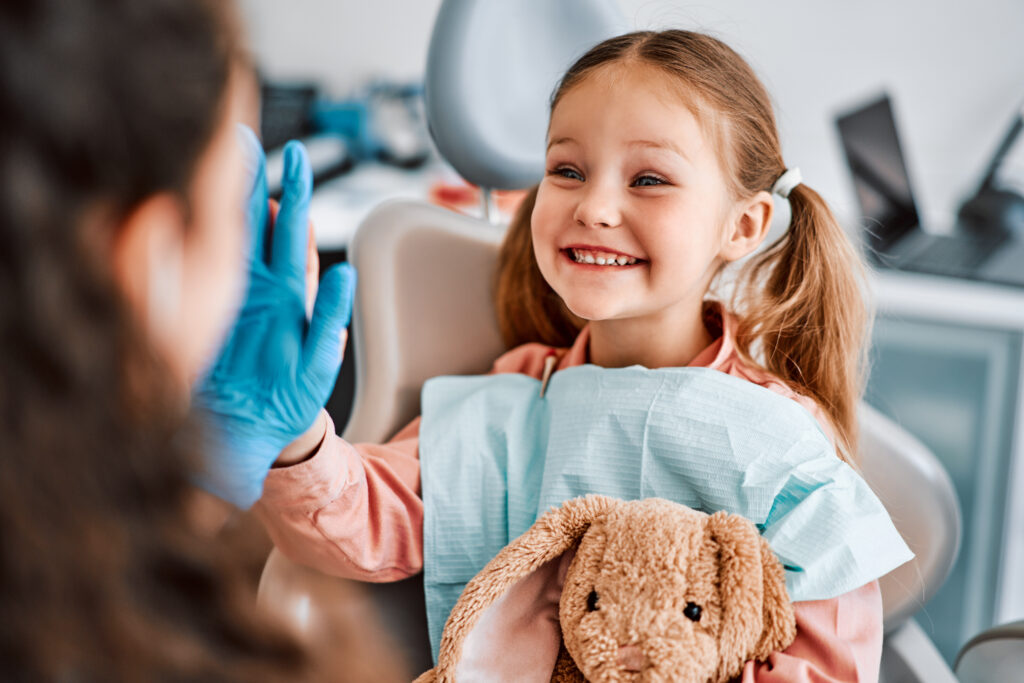
Choosing the right sedation option for your child can feel overwhelming, especially when you’re already worried about their dental experience. At Jungle Roots Children’s Dentistry & Orthodontics, we explain the types of sedation for kids we offer, from laughing gas to oral sedation to IV sedation, in plain language so you can make the choice that fits your child. Our pediatric dental team offers steady guidance from the first phone call to the follow-up visit.
Below, we’ll cover what each option involves, how they compare and how to decide what fits your child best. Along the way, we’ll share the questions we hear most often from parents, the safety steps built into every sedation plan and the small details that help kids feel at ease before, during and after treatment.
What Is Pediatric Sedation Dentistry?
Pediatric sedation dentistry uses safe, carefully measured medications to help kids relax during dental care. At Jungle Roots Children’s Dentistry & Orthodontics, our pediatric dental team offers three main options: laughing gas (nitrous oxide), oral sedation and IV sedation. Each helps anxious kids feel calm so they can receive the care they need comfortably, without the stress that can sometimes come with a longer appointment or a more involved procedure.
Sedation comes in different depths, including minimal, moderate and deep. None of these are general anesthesia. Your child keeps breathing on their own the whole time. With laughing gas and oral sedation, most kids can still respond to gentle prompts from our team. The level we recommend depends on the procedure and your child’s specific needs, as well as their temperament and past dental experiences.
One thing parents are often surprised to learn is that sedation reduces anxiety and helps kids stay still, but it doesn’t numb teeth. Local anesthetic is still used to keep the treatment area completely comfortable. The two work together as part of a layered approach to keeping your child relaxed and well cared for.
Common reasons families choose sedation include:
- Significant dental anxiety or fear
- Special healthcare needs that make long appointments difficult
- Lengthy procedures or multiple treatments in one visit
- A strong gag reflex
- Difficulty sitting still for younger kids
Every sedation visit at our office follows strict safety standards, with screening before treatment and monitoring throughout.
How Each Type of Sedation Works
Each sedation option works differently in how it’s given, how fast it acts and how long the effects last. Laughing gas is inhaled through a small nose mask and takes effect within about 5 minutes. Oral sedation is a liquid or pill given 20 to 60 minutes before treatment. IV sedation delivers medication directly through a vein for the fastest onset and the most adjustable depth.
Laughing gas (nitrous oxide) flows through a soft nose mask mixed with oxygen. Your child stays fully awake and can talk with us. The relaxed, slightly giggly feeling fades within minutes after we remove the mask, which is why kids can head back to school or play the same day.
Oral sedation uses medication given by mouth before the appointment starts. Your child stays awake but feels drowsy and calm. Many kids remember little of the visit afterward. We’ll give you clear instructions about timing before you arrive, including what to bring and how to prepare your child for the car ride home.
IV sedation is handled by Dr. Brady, who oversees sedation cases in our office. Medication enters through a small IV line, which allows precise control over sedation depth throughout the procedure. This is often the best choice for kids who need extensive work completed in one visit.
With all three methods, our team monitors vital signs continuously. Your child keeps breathing independently the entire time, and we’re trained to respond to anything that comes up during the appointment.
Benefits of Each Sedation Option
Each option brings its own strengths, and the right choice depends on your child’s temperament, the procedure and their medical history. Here’s a closer look at what each one offers and when it tends to work best.
What are the benefits of laughing gas for kids?
- Non-invasive, with no injections required
- Takes effect within about 5 minutes
- Wears off almost immediately after the mask comes off
- Kids can eat, play and return to school the same day
- Dosage adjusted easily during the visit
- Great for mild anxiety or shorter appointments
What are the benefits of oral sedation for kids?
- No injections involved
- Simple to give (just a drink or pill)
- Produces a deeper calm than laughing gas alone
- Works well for kids with moderate anxiety
- Helps children with strong gag reflexes stay comfortable
- Often results in little memory of the appointment
What are the benefits of IV sedation for kids?
- Deepest level of relaxation available in our office
- Sedation depth can be adjusted in real time
- Best option for complex or lengthy treatment plans
- Allows multiple procedures to be completed in one visit
- Ideal for kids with severe anxiety or special healthcare needs
- Managed by Dr. Brady, who oversees sedation care in our office
Beyond the clinical benefits, all three options share something important. They help kids build positive associations with dental care rather than fearful ones. A child who has one calm, comfortable experience is far more likely to approach future visits with confidence.
Sedation also lets us complete more treatment in fewer visits. That means less time away from school for your child and less time off work for you. For families with kids who have special healthcare needs, sedation often makes quality dental care genuinely possible for the first time.
Laughing Gas vs. Oral vs. IV Sedation: Side-by-Side Comparison
Here’s a quick way to compare the three options. This table shows how each one differs in onset, depth, recovery and best use.
| Feature | Laughing Gas | Oral Sedation | IV Sedation |
|---|---|---|---|
| Onset time | About 5 minutes | 20 to 60 minutes | Within minutes |
| Sedation depth | Mild | Mild to moderate | Moderate to deep |
| Recovery time | Immediate | A few hours | Longer, with supervision |
| How it’s given | Inhaled via nose mask | Liquid or pill by mouth | Through an IV line |
| Memory of procedure | Remembers the visit | Drowsy, partial memory | Usually no memory |
| Best use | Short visits, mild anxiety | Moderate anxiety, gag reflex | Complex cases, high anxiety |
| Child stays breathing on own | Yes | Yes | Yes |
| IV line required | No | No | Yes (small IV line) |
Laughing gas wins on speed and recovery, which is why it’s the most commonly used option in pediatric dentistry. Oral sedation hits a middle ground that works well for a lot of kids. IV sedation is the most involved but offers the deepest, most predictable experience for cases that call for it.
The right answer isn’t always the deepest option. For a quick filling in a mildly nervous child, laughing gas may be perfect. For a child who needs several crowns and extractions, IV sedation might save them from multiple visits and make for a much better overall experience.
Insurance and Sedation
Some insurance plans cover sedation when it’s medically necessary, such as for kids with special healthcare needs or when extensive treatment can’t be safely completed without it. Other plans cover only part of it, and some don’t cover sedation at all.
At Jungle Roots Children’s Dentistry & Orthodontics, we review your coverage before treatment, so you’ll know what to expect before we begin. Our team is happy to walk through your benefits with you and answer any questions so you feel confident moving forward.
Which Sedation Is Right for Your Child?
The right sedation depends on your child’s anxiety level, medical history, age and the type of treatment needed. Laughing gas suits kids with mild nerves and shorter procedures. Oral sedation works well for moderate anxiety or a strong gag reflex. IV sedation is best for severe anxiety, special healthcare needs or extensive dental work in one visit.
Here’s a general guide to help you think it through:
- Laughing gas fits well when your child feels a little nervous but can generally cooperate. It’s great for cleanings in anxious kids, single fillings or sealants.
- Oral sedation is a good match when laughing gas alone isn’t enough, when your child has a strong gag reflex or when the appointment will be longer than usual.
- IV sedation is often recommended for kids with severe dental fear, those with special healthcare needs, very young children needing significant treatment or anyone facing multiple procedures.
During your consultation, Dr. Culp and the Jungle Roots Children’s Dentistry & Orthodontics team will talk through your child’s past dental experiences, any health conditions and your own observations as a parent. Together, we’ll build a personalized plan that keeps your child safe and comfortable.
Frequently Asked Questions
What type of sedation is laughing gas?
Laughing gas is a mild inhaled sedative known as nitrous oxide. It’s mixed with oxygen and breathed in through a small nose mask. The effect is a light, relaxed feeling that fades within minutes once the mask is removed, which is why it’s the most commonly used option in pediatric dentistry.
What do pediatric dentists use for sedation?
Pediatric dentists typically use three main options: nitrous oxide (laughing gas), oral sedation medication and IV sedation for deeper relaxation. At Jungle Roots Children’s Dentistry & Orthodontics, we offer all three and match the option to your child’s specific needs, anxiety level and the procedure being performed.
Is IV sedation safe for a 5-year-old?
Yes, IV sedation can be safe for a 5-year-old when administered by trained providers following proper screening. Dr. Brady, who oversees sedation care in our office, reviews each child’s full medical history, weight and health status before sedation. Age itself isn’t the deciding factor. Readiness and safety screening are. Vital signs are monitored continuously throughout the appointment.
How long does recovery take after each type?
Recovery depends on the type used. Laughing gas wears off within minutes, so kids can return to normal activities right away. Oral sedation effects can last several hours, meaning your child will need rest and supervision at home. IV sedation has the longest recovery, often requiring the rest of the day for your child to feel fully back to normal.
Can my child eat before sedation?
Fasting rules depend on the sedation method. For laughing gas, a light meal is usually fine. For oral and IV sedation, we require specific fasting periods before the appointment to keep your child safe. We’ll give you clear, detailed instructions when scheduling, so you’ll know exactly what your child can eat and when.
Will my child remember the procedure?
Memory varies by sedation type. With laughing gas, your child stays aware and remembers the visit. Oral sedation often leaves kids with a hazy, partial memory. IV sedation usually results in no memory of the procedure at all, which can be a real benefit for kids with significant dental anxiety.
If you’re weighing sedation options for an upcoming visit, we’re here to help you think it through. Jungle Roots Children’s Dentistry & Orthodontics has cared for Ahwatukee families since 1994, and we’re proud to now be caring for a second generation of patients. Request an appointment or call us at (623) 283-1336 to talk with our team about what might work best for your child.